
Trace Former Pendleton County Owners
A backward deed chain begins with the parcel you know. It then walks toward the earliest recorded owner. Each step finds the deed that conveyed the land to the prior grantee. Then the search repeats with that person as the new buyer. The table here is a working layout, not a sample. Fill it only with names and dates copied from real Pendleton County instruments. The legal description is your safety check. Roads change, parcel keys change, and owners change. But the land itself stays described in fixed terms across the chain.
| Transfer date | Grantor to grantee | Deed type | Book and page |
|---|---|---|---|
| Latest transfer | Read from the current deed image | Use the instrument label | Copy the cited reference |
| Prior acquisition | Search the grantor as an earlier grantee | Read the recorded deed | Carry the earlier reference |
| Earlier link | Repeat name and land-description checks | Do not infer a transfer | Record each volume and page |
The Clerk's online name index is still growing. Its starting year has not been stated. For older ownership, turn to the State Archives. Its finding aid groups Pendleton County deeds by letter and decade from the 1790s forward. Catalog summaries mention a deed index spanning 1788 to 1951. Availability must be checked against the actual collection. Land books, land-tax lists, and surveys can add real context along the way. None of them replaces the deed itself.
Pendleton County Deeds and the 1788 Record
Pendleton County was formed in 1788. Its deed records are reported to reach back to that founding year. A 2026 courthouse history tells a striking story. As fire approached, residents and officials passed documents through the windows to save them. That rescue is why an old title search here is even possible. It does not guarantee that every early deed is indexed by name. Nor does it promise that every such deed is viewable online today.
The WV Archives' Ar2095 finding aid offers a practical route in. It lists County Clerk deed groups alphabetically and by decade. The listings start in the 1790s. Catalog summaries also report deed index material into the mid-twentieth century. They likewise cover land records from the eighteenth and nineteenth centuries. Treat those ranges as leads, not promises. Verify them against the holdings themselves. The Archives finding aid for Pendleton deeds identifies the letter and year runs.
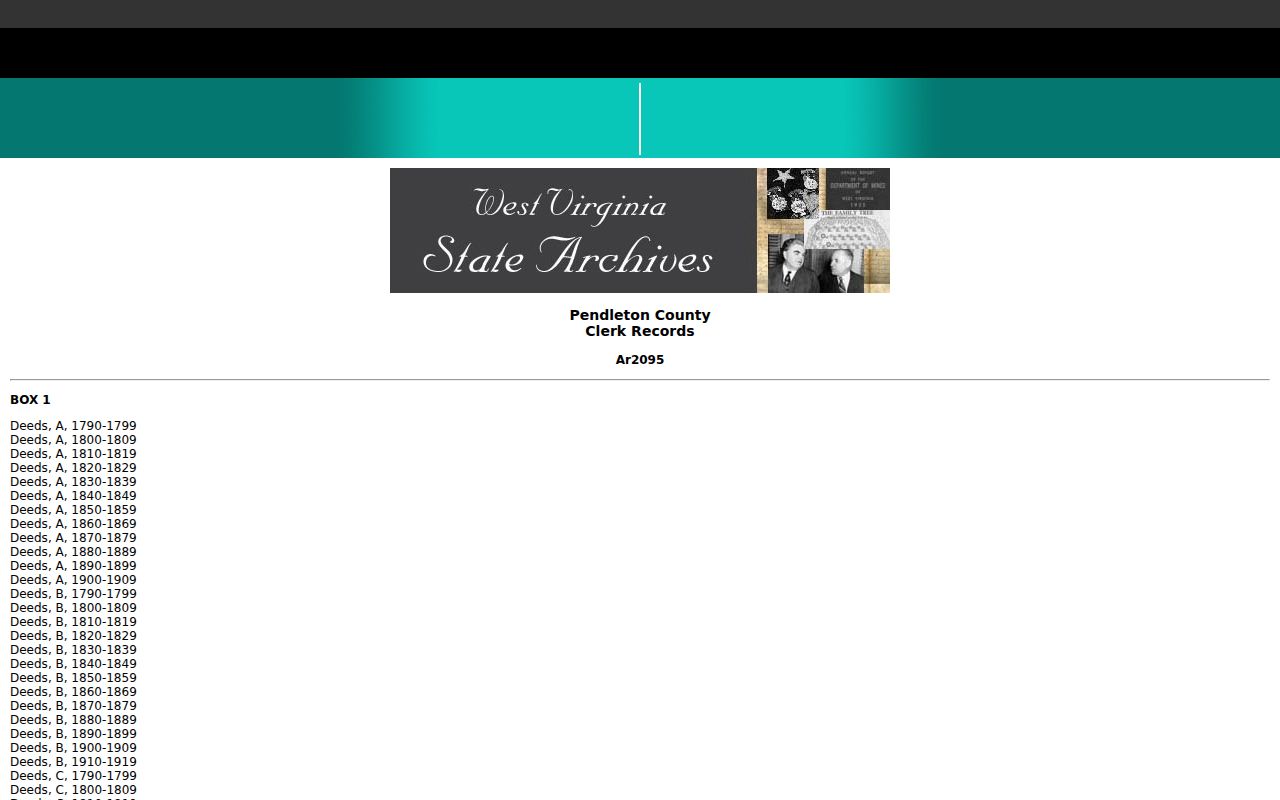
The finding aid helps identify which volume to inspect when the modern search stops.
Online Coverage for Pendleton Former Owners
The county Clerk page gives no precise first year for its current online index. It warns that name indexing is unfinished and still continuing. A catalog-reported 1788 to 1951 deed index is a helpful historical lead. Image access and exact coverage need confirmation, though. So the better question is not simply how far back the portal goes. Ask which index, book, or film holds your party and legal description.
Begin with the newest online deed and follow its citations. A name search may come up empty. Try the book and page, name variants, a probate reference, or the land description itself. The online layer may stop reaching the next instrument. Move then to the Clerk's historic books or the Archives finding aid. A missing online hit never proves a former owner held nothing.
Walk a Pendleton County Chain Backward
The backward method is simple to state. Each link still needs a land check. In the County Clerk's index, search the current grantee and open the deed image. Note the prior grantor and the legal description, then search that grantor as a grantee in the next earlier deed. Keep repeating with every newly found grantor. A date, deed type, and book/page citation will hold the sequence in order, and no two records should be joined on a surname match alone.
- Start with the parcel and its latest deed reference.
- Read the grantor, grantee and full property description.
- Find the prior acquisition by searching that grantor as grantee.
- Check the land description again and record the next reference.
The Pendleton County deed-records page covers the Clerk’s search modes and copy route. This page instead walks a deed chain backward through time. It is no substitute for a title examination.
Reading a Pendleton Deed Chain
Grantor means the party who conveyed the interest. Grantee means the person or entity receiving it. A chain of title is the ordered set of transfers tied to one parcel, and in Pendleton County the book/page citation is the confirmed index reference given in the Clerk's own instructions. The record may also carry a legal description far more exact than any modern street address. Keep the original spelling and name variants exactly as written in each deed. Note corrections separately, never inside the quote.
- Use the latest deed reference or search the current grantee’s name.
- Record its grantor, deed date, type and land description.
- Search backward for that grantor as a prior grantee.
- When the online index ends, switch to older books or archive leads.
- Grantor
- The party named as conveying land or an interest.
- Grantee
- The party named as receiving that interest.
- Chain of title
- Recorded transfers linked to one parcel over time.
- Legal description
- The deed text that defines the land beyond a postal address.
Pendleton Plats and Legal Descriptions
A later deed in Pendleton County may point to a plat. It may cite a survey, or a book-and-page reference. That citation can tie an old transfer to a modern parcel. The County Clerk keeps the maps and plats. Rural land, though, is often described by acreage or metes-and-bounds calls. Some older deeds name adjoining owners rather than a subdivision lot number. Pull the recorded plan named in the deed to check the footprint. The county publishes no complete Franklin subdivision roster or plat index. Treat a local place name as a recorded subdivision only when a clerk reference backs it up.
Road names and rural addressing change over time. The legal description often remains the best bridge. Note its calls, acreage, and neighboring tracts. Then compare them against the current assessor parcel. The described land may seem to split or merge. Ask the Clerk whether later plats or deeds record the change. Never assume a GIS map polygon matches the shape of a centuries-old description.
Estate Events in a Pendleton Chain
Probate can break a tidy deed sequence. Wills, executors, and administrators all pass through the County Clerk. The estate file may hold a will, an appointment, an inventory, or a sale order. It may also hold a final settlement. An executor deed, an administrator deed, or a court order may be the very instrument. It may have moved a Pendleton County tract. Search under the estate name and the representative. Then match the legal description to the same parcel.
A will can name a devisee. It still cannot tell you the present assessment owner on its own. A death certificate confirms a person, but it conveys no land. Follow the probate entry into the Clerk's land records. Only then add any heir to the ownership timeline. Vital records carry separate eligibility rules, so confirm access with the state repository.
Archive Access for Pendleton Owners
When the current county index stops short of the next link, turn to the WV Archives finding aid. Ask the Clerk about historic books, indexes, or microfilm as well. The Archives groups deeds by letter and decade. The exact inspection or copy route still needs confirming with staff. The Pendleton County Public Library holds local-history and genealogy materials. It can help track down catalog references. A book clue or family-history note is not a title record. It must match the recorded deed. The West Virginia land-record portal landing page provides the statewide entry point for county availability.
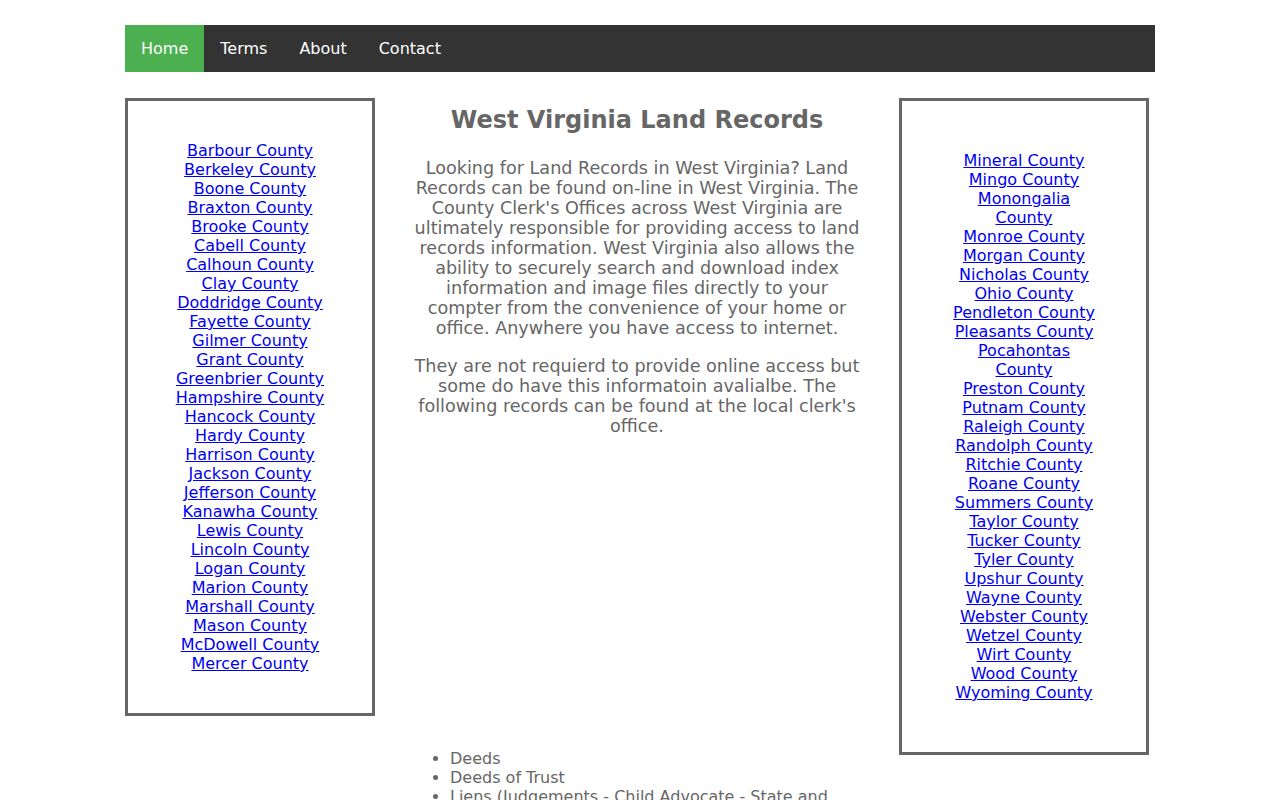
Check the portal for current Pendleton County access, then use the Archives route for volumes that are not online.
Request Older Pendleton County Deeds
West Virginia FOIA requests go straight to the public body that keeps the record. Ask the County Clerk for a specific index entry, deed book, plat, or copy. Include names, likely dates, and legal-description terms. W. Va. Code §29B-1-3 sets a response period of no more than five days, excluding weekends and legal holidays. The same statute allows only actual reproduction cost as the copy fee. Confirm the Clerk's current copy and inspection rules before requesting an older volume.
When the index has a name gap, explain the search you tried. Give the parcel ID. Ask whether a physical grantor or grantee book can be checked. That gives the custodian a clear starting point. It does so without asking it to certify a title chain.
How Far Pendleton Ownership Records Reach
Pendleton County deeds are reported to reach back to the county's 1788 formation. The courthouse-fire account explains why the early books survived. The modern online Clerk index has no stated cutoff year. Its name coverage is incomplete. The Archives finding aid lists deed runs beginning in the 1790s. Catalog summaries report an index through 1951. These are different sources with different coverage, not one continuous online property search.
Coverage note. Pendleton County does not publish the online name index’s first year. For older owners, use the Clerk’s books and WV Archives finding aid; verify each catalog range before relying on it.
Former-owner research can support house history, boundary diligence, and a title review. Do not use names or mailing addresses to track or harass a living person.