
How to Search Franklin Property Records
Start with the parcel. Find it in West Virginia's assessment or parcel viewer. Match the property description to the land. Recorded deeds and the deed index belong to the Pendleton County Clerk. The Sheriff handles tax collection. Mapping runs through the statewide viewer. Franklin itself has no town assessor or recorder for local parcels, so for county tools and identifiers begin with the Pendleton County property search guide.
- Search the assessment system by street address, owner, or the parcel's district and map key.
- Use the parcel number and owner names to locate the relevant deed in the County Clerk's grantor/grantee index.
- Check the Assessor card and Sheriff tax status separately; assessment and payment are different records.
- Open the statewide GIS viewer to orient the parcel, then compare its description with the deed or recorded plat.
- For permits, zoning, or town services, ask the Town of Franklin directly; a public online permit search was not found.
Which Offices Hold Franklin's Land Records
Franklin is the county seat. The main county records offices sit in town. Their holdings cover all of Pendleton County, not just Franklin. The Clerk records deeds and related instruments. The Assessor keeps parcel cards and assessments. The Sheriff administers property tax collection. Online parcel access comes through the statewide viewer and assessment system. For contact routes, the county office directory on the Pendleton County property records home page carries the details.
The town's own public site is a different source entirely, covering municipal services, events, and contacts, and it can point a resident toward the right town official. It is not a land-record index. Franklin publishes no town recorder, no searchable permit database, and no public zoning case portal. Because an absent online search proves nothing, ask the town directly whether it holds a permit or planning file for a particular address.
Pendleton County property records
Deeds, assessment cards, and tax accounts are held by the county custodians. Use the county and state systems to identify the parcel, then contact the responsible office for certified or corrected records.
Town of Franklin services
For town service questions or a municipal file, use the Town of Franklin's published contact information. No separate online permit lookup was documented.
West Virginia's Franklin local-government page gives a state-hosted town entry point and contact context.
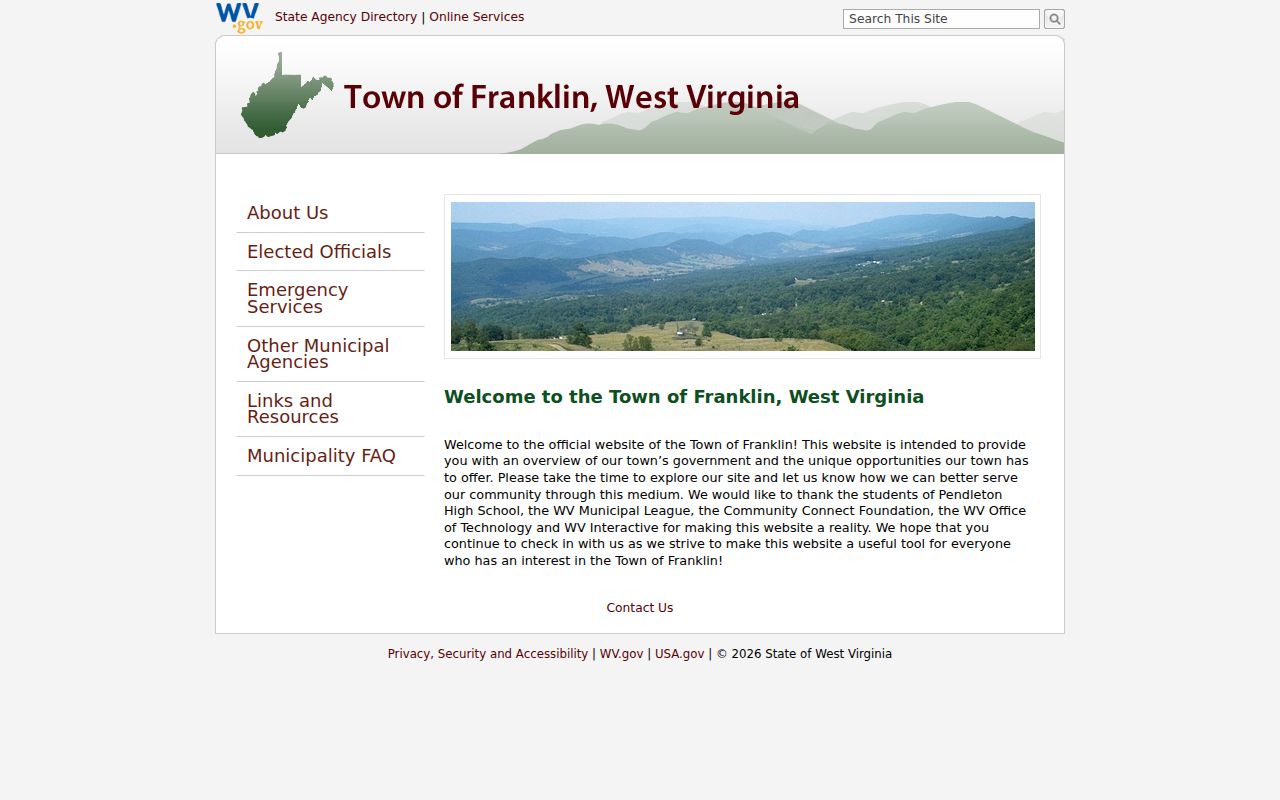
The town page handles municipal questions, not land-record searches.
Franklin's Historic District and Property Research
Franklin's National Register historic district was listed in 1985. That date anchors historic context for property work in the county seat. The listing invites research into old buildings and street history. It proves nothing about any single parcel. No parcel-level district map is published online. Before applying the designation to a specific address, verify the location with the appropriate preservation or town source.
Historic status and property title are separate questions. National Register context cannot replace the Clerk's deed chain, establish the current owner of record, or fix a lot's boundaries. For an older Franklin parcel, pair the historic clue with the instrument description and any recorded plat. Keep the town's historic identity in mind without assuming every property near Main Street carries the same designation or restrictions.
Pendleton County's history and arts page identifies the district. It adds local context. It settles no boundaries.
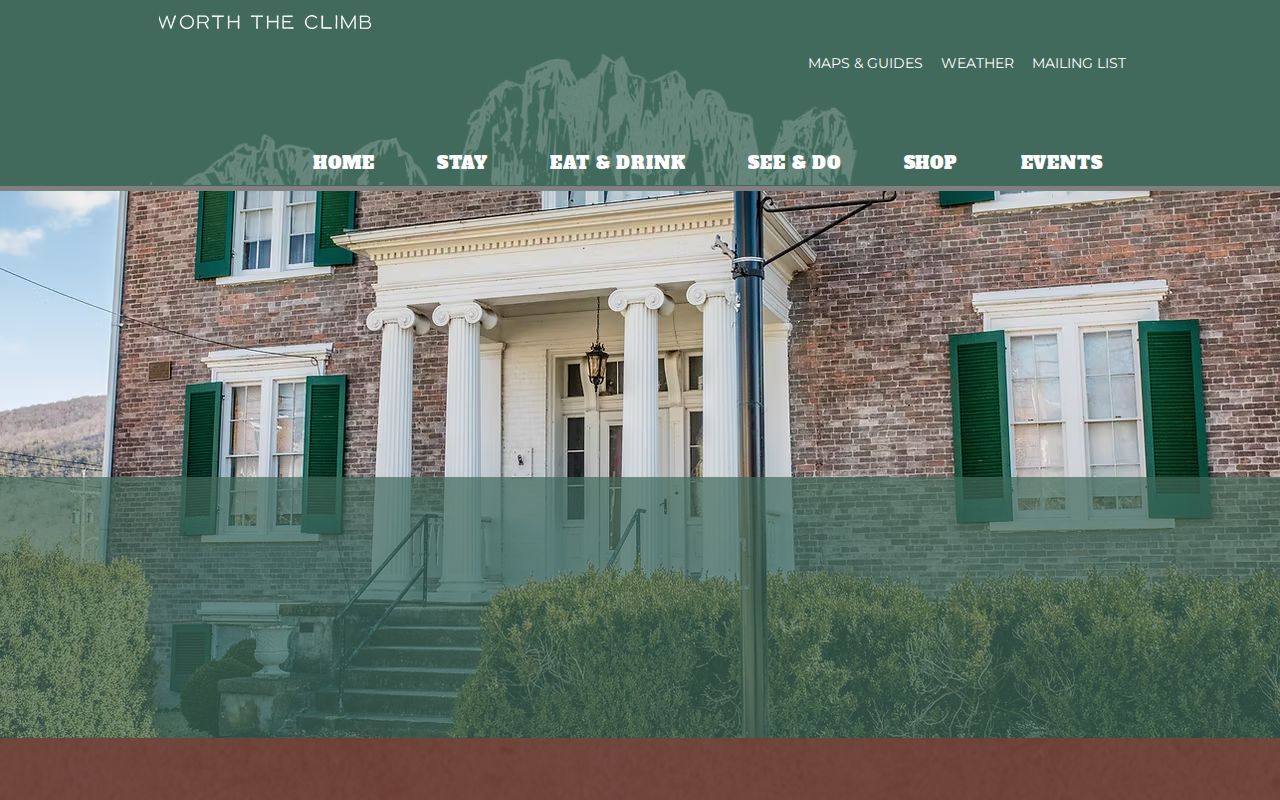
Treat the history page as context. Parcel boundaries and deed facts live in their own records.
Local History Sources Beside the Deed Chain
Local history adds names, dates, and stories. Those details can make an older deed easier to understand. The Pendleton County Historical Society runs the Boggs House museum. Its displays and collections may frame a question about a Franklin building or former resident. Interpretive history is not a conveyance record. When a story suggests an owner or date, confirm it against the County Clerk's deed or probate records.
Older ownership research is sensitive to spelling variants, estate transfers, and family conveyances. A museum reference can suggest a person or era. It cannot replace the grantor/grantee index. Never let a similar name decide who held title. The Pendleton deed records guide describes the county's older indexes and the West Virginia Archives finding aid.
The society's museum page explains the Boggs House.
Take leads from the museum. Verify every land transfer in the deed book or official file.
Town Services and Questions About a Franklin Address
Franklin's town government publishes details on water, sewer, trash, local events, and town contacts. That helps with a municipal account question. It cannot replace the county tax roll or prove a parcel sits inside corporate limits. When a service boundary affects a purchase or an improvement, get confirmation from the town and compare it with the parcel's legal description.
A service listing shows what the town offers. It does not map which parcels receive it. Staff can confirm whether a specific address gets a service or falls under a local rule. Franklin publishes no address-level permit, zoning, or code-enforcement search. Take building-history questions straight to the town office. Never assume the county GIS map or the assessor's record contains municipal permits.
The same caution applies to rights-of-way. A recorded right-of-way lives in the County Clerk's deed records, not in a service listing. The Town of Franklin's website carries the town's service, event, and contact details.
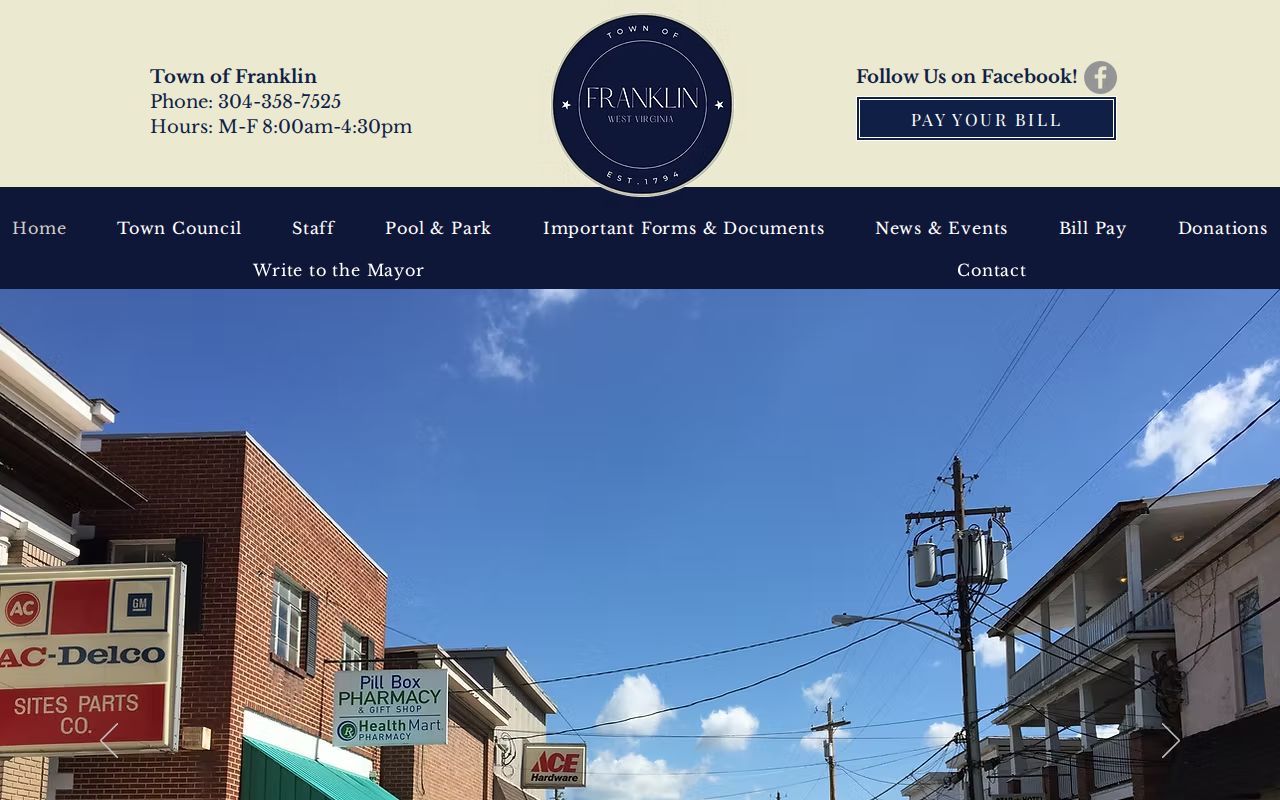
Ask the town about parcel-specific service and permit questions.
Franklin Research Through the County Library
The Pendleton County Public Library in Franklin is a strong starting point for historical and genealogical research. Its catalog and local-history collection hold real value. Staff referrals can point you toward books, family histories, old newspaper references, and archive descriptions. These leads shine when a deed book lists an unfamiliar name or an old place reference. They cannot certify who owns land today. Boundaries and ownership belong in the land records.
Pair the library with the West Virginia Archives whenever a modern online index stops short of the period you need. The County Clerk remains custodian of recorded land instruments. Assessment questions go to the assessor, while tax payment and delinquency questions go to the Sheriff. Check hours before you visit. Bring any names, parcel identifiers, and deed citations. The Pendleton County Public Library website posts its contact and research access details.
Library materials in Pendleton County can help locate a historical reference or trace an old parcel number. Verify ownership and transfer dates through the official deed records kept by the county recorder.
Franklin Neighborhood and Plat References
Franklin publishes no register of neighborhoods or subdivisions. Development dates and parcel prefixes likewise lack any official listing. Guessing a neighborhood name invites dead-end searches. Instead, let the deed's legal description and the County Clerk's recorded plats drive the search. A subdivision name may appear in a deed. When it does, transcribe it exactly from that instrument rather than from a mailing address or an informal local label.
| Reference | Era or boundary | How to verify |
|---|---|---|
| No verified Franklin subdivision roster located | Not established in the reviewed local sources | Check recorded plat books and the deed description with the County Clerk |
A deed that names a lot, block, addition, or plat hands you the best search term. Search that exact phrase in the county's land-record sources. Then compare the cited map against the parcel itself. The Pendleton County parcel-map guide shows how to use GIS for orientation while keeping the legal description as the controlling authority for the tract.
Franklin ZIP Code and Municipal Boundaries
ZIP code 26807 serves Franklin postal delivery. A ZIP code is not a town boundary. Mailing labels can stretch across rural routes and nearby areas well outside the municipality. A tax notice's community name settles less. It does not prove the parcel receives town services or lies within Franklin's legal limits.
When boundary status matters, pin down the tract first. Use its West Virginia parcel key and legal description. Then ask the town or county to confirm jurisdiction. Courthouse proximity, a Franklin mailing address, a GIS label, or a nearby landmark proves nothing about incorporation. The distinction matters most when a town-service question rubs against a county assessment or tax record. Each record describes the same land from a different administrative seat.
Franklin Assessments Follow the County Roll
Franklin has no assessment roll of its own. The Pendleton County Assessor's record is the right starting point for any Franklin parcel. West Virginia assesses property at 60 percent of true and actual value. Valuations carry an annual July 1 date. The state also runs a three-year valuation cycle. Those rules frame the numbers you will see. No Franklin-only price trend, average value, parcel count, or revaluation percentage is published.
For a specific property, set the assessment card beside the deed history. Note the tax year on each. A recorded sale documents one transfer, not a guaranteed present market price. An assessed value is for taxes, not appraisal. The Assessor can explain a roll entry, the Sheriff handles payment and delinquency, and the Pendleton County property value page covers that distinction without offering a townwide estimate.
What Franklin Property Records Can Establish
Deeds held by the county document transfers and recorded interests. Assessment cards describe each parcel for tax purposes. Sheriff records cover the tax side, while GIS layers help you locate mapped parcels. Town sources, meanwhile, can field questions about municipal services and point residents toward local officials. Franklin property records work best as a set rather than a single source. No one portal proves every fact about a tract. Online indexes can run incomplete. Parcel geometry may be approximate or absent. Municipal files may not be searchable online at all.
When a title question arises, read the instruments themselves and bring in a title professional. A disputed line on the ground calls for a licensed surveyor. A current market opinion belongs to a qualified appraiser. For a town permit or utility question, contact Franklin directly. Provide the exact address or parcel number. Using owner of record details to harass or harm anyone is prohibited.
Verify with the custodian. Franklin property records are useful for lawful property research, due diligence, and civic information. A public result is not a title guarantee, survey, permit determination, or market appraisal; confirm the specific record with the office responsible for it.