
Pendleton County Deed Types and Uses
The Clerk's online land-record page sorts recorded instruments into groups. Each group does different work. A deed records a conveyance. A deed of trust secures a debt against the land. A release can clear a recorded lien. Judgment and probate instruments matter too, since they can change how a later transfer reads. Whatever the type, a record is only as useful as the parties and the legal description it names. Read the instrument image rather than trusting an index label.
| Instrument | What it records | Why it matters |
|---|---|---|
| Deed | Conveys the described land or interest | Confirm grantor, grantee and legal description |
| Deed of trust | Records a security interest | Look for a later release or satisfaction |
| Judgment | Records a court-related claim or result | Match it to the court file and any release |
| Probate instrument or will | Shows an estate event or direction | Check for the deed or order that carried title |
| Release | States a recorded claim was released | Read the named debt, parties and reference |
Pendleton County deeds may describe land in full metes and bounds. Some use a plat reference instead. Others list acreage with adjoining owners. An index line shows none of that. Pull the instrument. Compare it to the assessor parcel and any recorded plat or map. Note the book and page so the next search starts from solid ground. A deed on record is evidence of a recorded act. It is not a title opinion. It is not a survey of the current tract.
Pendleton County Deed History to 1788
Pendleton County deed history reportedly reaches back to the county's formation in 1788. A 2026 courthouse history in West Virginia Lawyer tells of residents and officials passing record books through open windows. A fire was closing in. The deeds survived. That close call is a practical reminder: search the historic books whenever a modern name index returns nothing. The online index is not the whole record system. The portal does not state its starting year. The Archives' Pendleton County Clerk finding aid lists the deed runs by letter. It also gives the time span. Use it to identify a volume or a year range.
The finding aid organizes County Clerk deed records by letter. It groups them by decade from the 1790s forward. Other catalog summaries add a deed index through 1951. They also list historic land books, land tax records, survey lists, and location books. The finding aid is the stronger lead for physical holdings. Catalog runs still need confirmation against the actual collection before you plan a visit. These sources help trace former owners. They do not promise that every older image sits online.
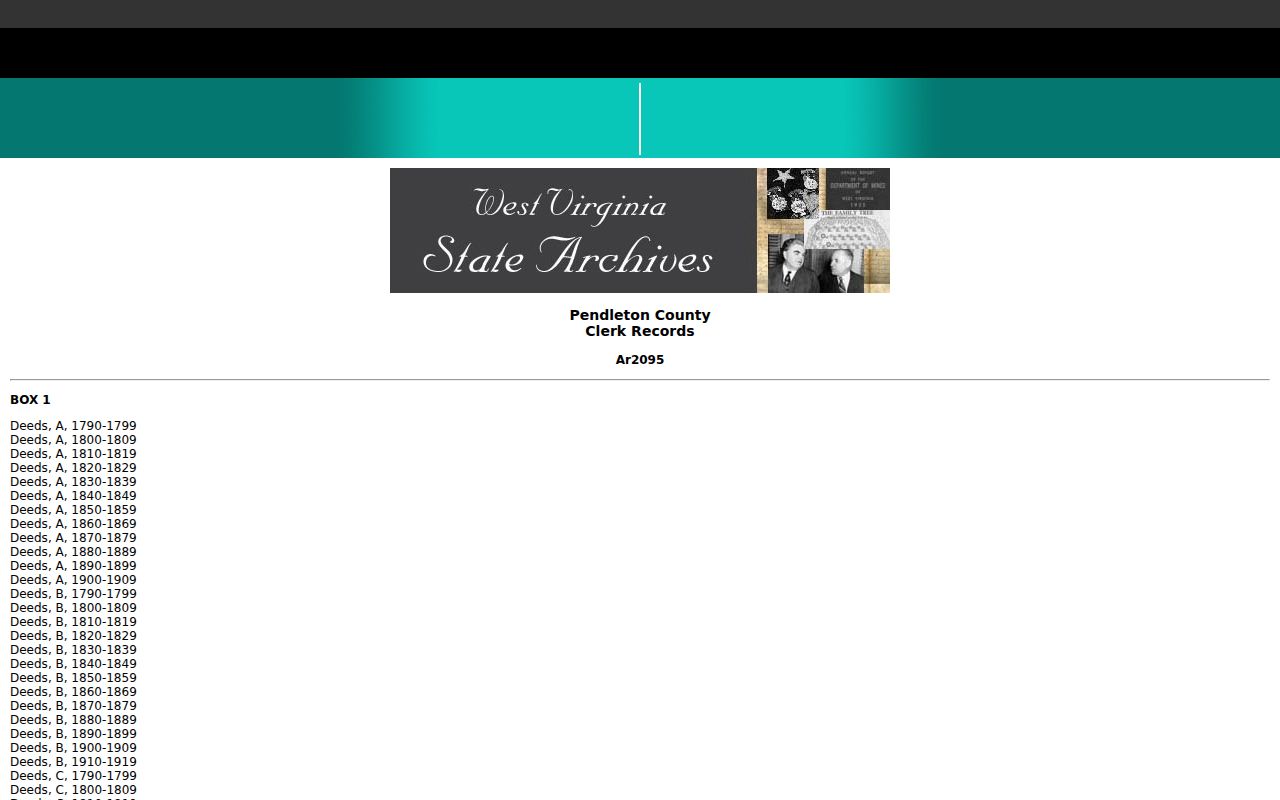
Use it to pick a volume, then confirm copy options.
When Pendleton County Names Do Not Match
A name search can miss a deed. The Clerk says not every record is indexed by name, so the gap may sit in the index rather than in the deed books. Names shift. A party may appear with an initial, a middle name, a spouse, an estate, or a business form, so search both sides when you know them. Confirm with the legal description. The parcel ID and book and page pin down identity better than any spelling of a name. A later deed often cites the earlier volume anyway.
For an old Pendleton County tract, compare adjoining owners and distinctive boundary calls instead of trusting a name. Old deeds use acreage and metes and bounds. They rarely carry a modern street address. A plat name or survey reference often works better as a retrieval clue than the owner's current mailing name. If an entry stays missing, ask the Clerk about a physical index or a deed-book search. A gap in the results is not proof the land was never conveyed.
Pendleton County Grantor-Grantee Search
The grantor conveys the interest. The grantee receives it. To trace a recent Pendleton County transfer, search the current owner as grantee. Note the book and page. Open the image. The prior owner appears there. Searching that party as grantee in an earlier instrument takes you another step back. Repeat until the chain ends. To test a sale forward, start from the seller as grantor instead. Keep a working note of names, deed references, and legal descriptions. A similar-name result never gets mistaken for the same tract that way.
The Clerk confirms both search modes and an "Image" indicator for view or print access. Name indexing is incomplete, the office warns, and still expanding. The portal publishes no clear statement of its full instrument dropdown. It also omits the coverage cutoff, image fee, subscription rules, and pagination. An empty result does not mean no deed exists.
| Search item | How it is used | Local caution |
|---|---|---|
| Name | Find an indexed party | Coverage is incomplete |
| Book and page | Open a known record reference | Copy the citation exactly from the parcel or deed |
| Record category | Choose deeds, deeds of trust, judgments, probate, releases or wills | Full dropdown was not captured |
| Image indicator | View or print a document when available | Current cost and account rules need Clerk confirmation |
| Disclaimer | Accept the legacy portal notice | Required before the linked search opens |
- Search the current owner as grantee or open the known book/page reference.
- Read the deed image and note the prior grantor, date and legal description.
- Search that grantor as a grantee in an earlier deed and compare the parcel language.
- Repeat until the online index stops, then use the Archives finding aid or Clerk’s books.
- Grantor
- The party conveying a land interest.
- Grantee
- The party receiving the interest.
- Chain of title
- The sequence of recorded transfers tied to one tract.
- Book and page
- The County Clerk’s page reference for a recorded instrument.
The Pendleton County Clerk's records page describes the searchable land categories and the incomplete name index. It also holds the office contact details.
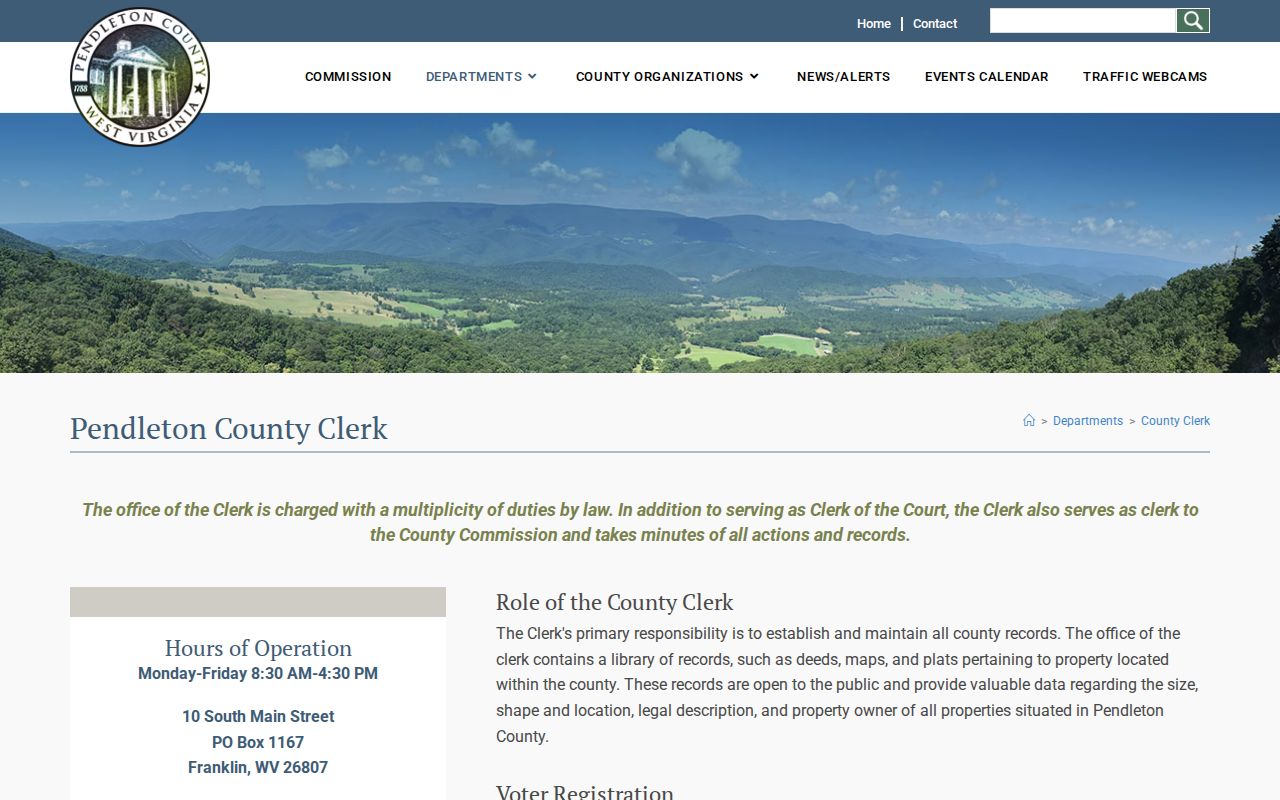
Check the county page for the current entry point.
Get a Pendleton County Deed Copy
Marked deed images can be viewed and printed online, the county says. Need something certified or on paper? That order goes to the Pendleton County Clerk. Give the office the party names and the instrument type. Add the book and page if you have them. Copy, certification, and recording charges change. Ask for current figures before ordering. The Clerk's website posts no fee schedule for images or copies. Treat any third-party price as unreliable.
When no image shows up, ask the office. The deed may sit in a physical book, index, or microfilm. Include the legal description or parcel reference along with the names. One narrow request works far better than asking for every deed tied to a surname. If the record is a public file, send a WV FOIA request to that custodian. Do not route it to some unrelated state office.
Recorded is not a title opinion. The Clerk’s index shows filed instruments, not a guarantee that title is clear. A qualified title professional reviews the full chain and exceptions.
Pendleton County Releases and Liens
Deeds of trust, judgments, and releases all appear among land-record categories. The Pendleton County Clerk keeps them. A recorded deed of trust is often followed by a release or satisfaction. A judgment may carry its own lien entry and a later court order. Search under both borrower and lender. Check the trustee or court party when the index allows. Easements and restrictions can hide inside a deed or plat. They may not sit under a tidy lien label.
Track the instrument date, book and page, and exact parties for any Pendleton County parcel. Hunt a later release under more than one name if the first try misses. A docket explains a dispute. But the recorded release or judgment is the real land-record evidence. Name indexing stays incomplete, the Clerk warns. Request counter help when a release matters to a title review.
Estate Deeds in Pendleton County
A death can make the assessment owner and the deed chain disagree. Wills, executors, and administrators all live in Pendleton County probate records. The will or probate order may show who was meant to receive land. The transfer itself usually arrives through an executor or administrator deed, an affidavit, or a court order filed with the land records. Check the probate file for the named estate representative, the inventory, and the final settlement. Then match the land description to the parcel.
Official death records sit with State Vital Registration. Access rules depend on the record's age and who is asking. A death certificate or obituary helps confirm the person. Neither one transfers land. Follow the probate and Clerk instruments to see the property disposition, keeping a family-history clue apart from proof of a recorded title event. WV Vital Registration's certificate instructions cover the state request route and the published fee. Property transfer records stay with the Pendleton County Clerk.

A vital record proves a life event; only a recorded deed or court order proves the land transfer.
Pendleton County Court Records and Deeds
Foreclosures, quiet title actions, partitions, and boundary disputes all leave traces in a circuit-court docket. The judiciary provides statewide circuit and magistrate access. Its free Magistrate Record Search accepts a name or case number. It returns up to 30 entries without the court file itself. For actual documents, call or visit the Pendleton court clerk. Once the case ends, turn to the County Clerk. Ask there for the sheriff's deed, release, judgment, or other recorded instrument tied to the parcel.
The docket gives context; the land record shows whether anything was filed. Carry the case number, party names, and legal description between offices. A court result alone never tells you whether a sale closed. It also won't say whether a lien came off. The West Virginia judiciary's court-access page lists the entry points for circuit and magistrate records.
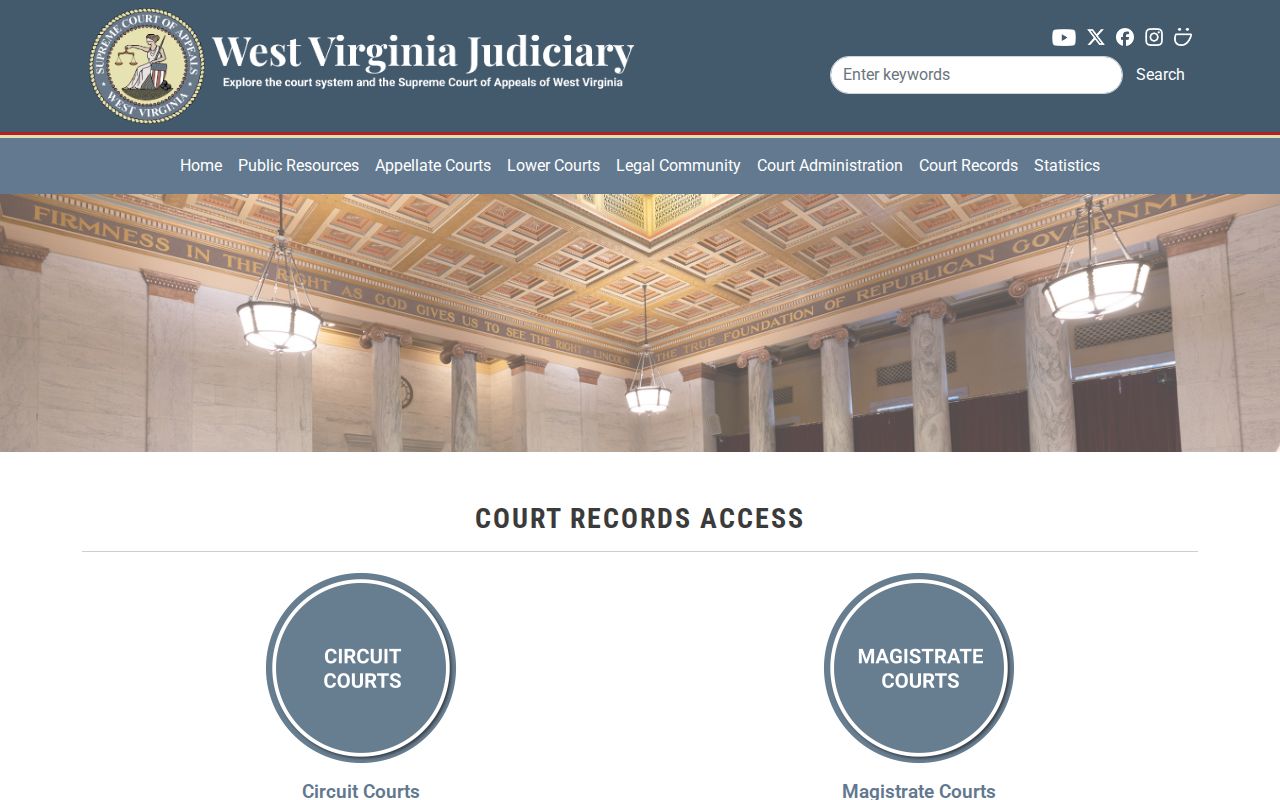
Statewide access is only a route to case-search tools. Get the complete file from the clerk responsible for that case. The free Magistrate Record Search is one entry point for Pendleton County case information.
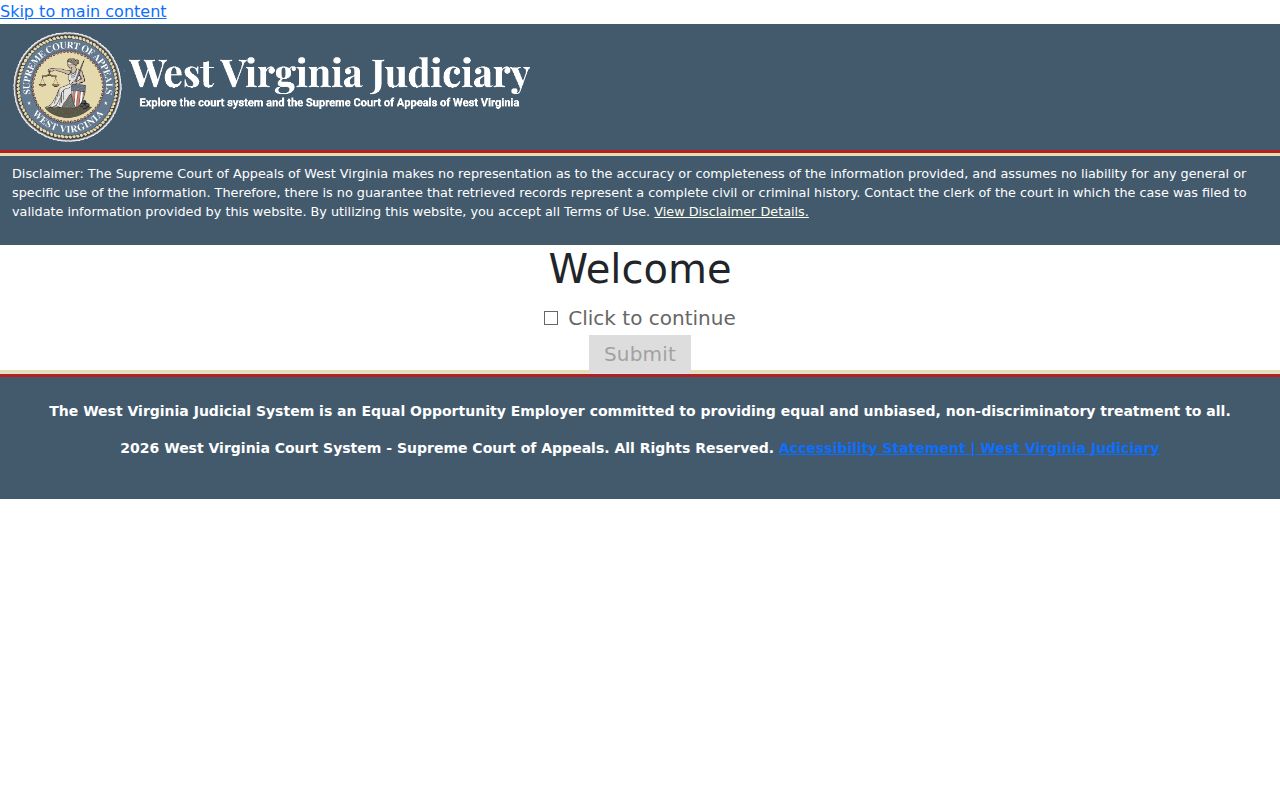
Use the case number to request the underlying file from the local clerk.
Request a Pendleton County Deed Record
West Virginia FOIA, W. Va. Code §29B-1-3, lets anyone request a record from the public body holding it. Ask the County Clerk for a specific deed, plat, index page, or book reference. The law calls for a response as soon as practical. It must come within five days, excluding weekends and legal holidays. The custodian may hand over the record, arrange inspection, or deny the request in writing. A reproduction fee can cover actual copying cost, but not search or staff time.
The Clerk's page, the online name search, the book and page route, the counter, and the physical archive are all access channels. Each one works differently. Older Pendleton County documents go faster with a name variant. A year range, deed-book reference, and legal description help too. Ask whether the record sits in a current portal, a book, or another archive. Do this before paying. The West Virginia land-record portal is a statewide entry point. Check its county availability and access terms. Then confirm older-book options and certified-copy details with the Pendleton County Clerk.
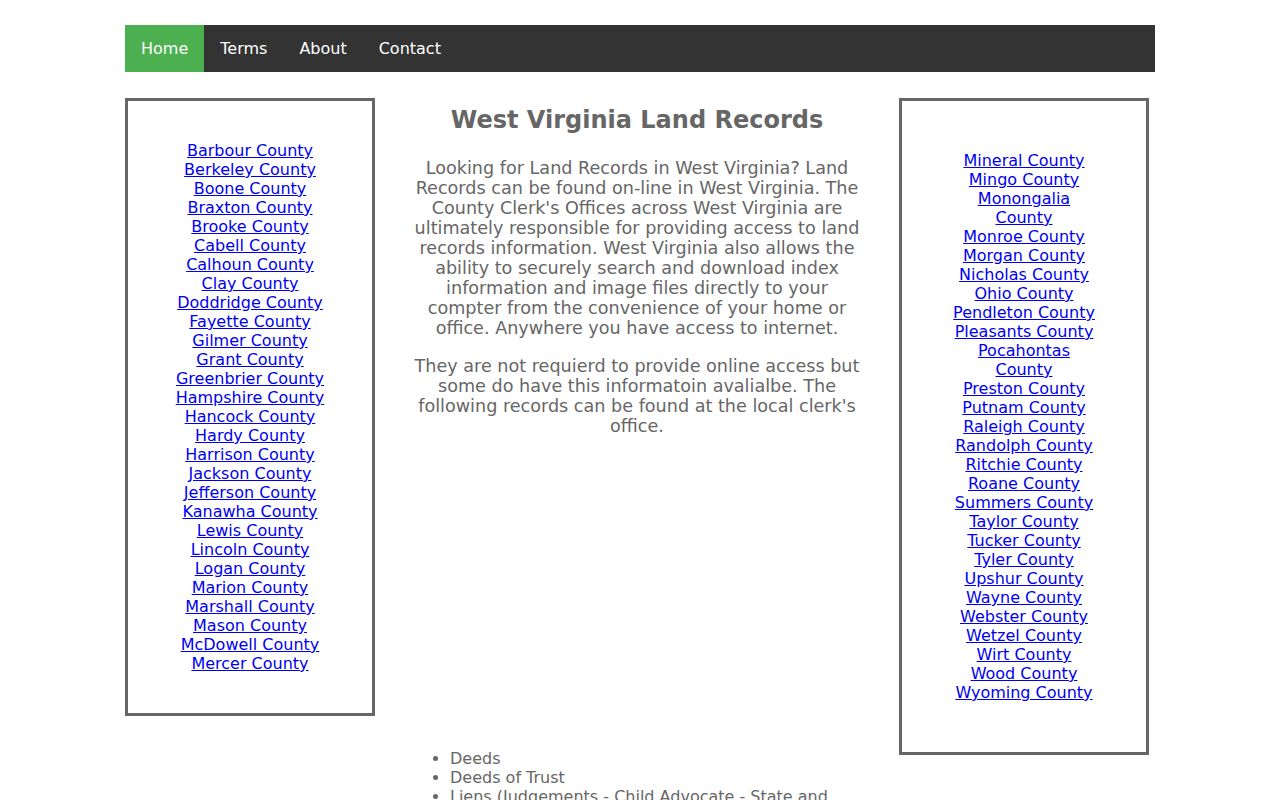
The portal is only an access lead. It does not confirm that every Pendleton deed or index year is online, so verify coverage with the Clerk before relying on it.